The Ningbo Municipal Bureau of Science and Technology recently announced the list of 2026 Ningbo Class A Key Laboratories, with five laboratories from the Medical Department being recognized.
Ningbo Key Laboratory of Malignant Tumor Immunodiagnosis and Immunotherapy
The laboratory is directed by Professor Hou Xin from the School of Basic Medical Sciences, Medical Department. Leveraging the Medical Department’s strong technical expertise and R&D advantages in bioinformatics analysis, novel immune checkpoint molecule discovery, gut microbiota regulation, non-coding RNA detection, and small-molecule drug design and synthesis, the laboratory addresses major needs in malignant tumor diagnosis and immunotherapy. Its research focuses on three core areas: mechanisms of tumor immune evasion, immune biomarkers and precision diagnosis, and immunotherapeutic drug development and strategies. The laboratory aims to build a precise, efficient, and safe cancer diagnosis and treatment system, closely aligned with clinical priorities for high-incidence cancers in Ningbo, such as lung and gastrointestinal cancers, while advancing applied basic research, key technological breakthroughs, technology translation, and talent training to strengthen the regional tumor diagnosis and treatment system.
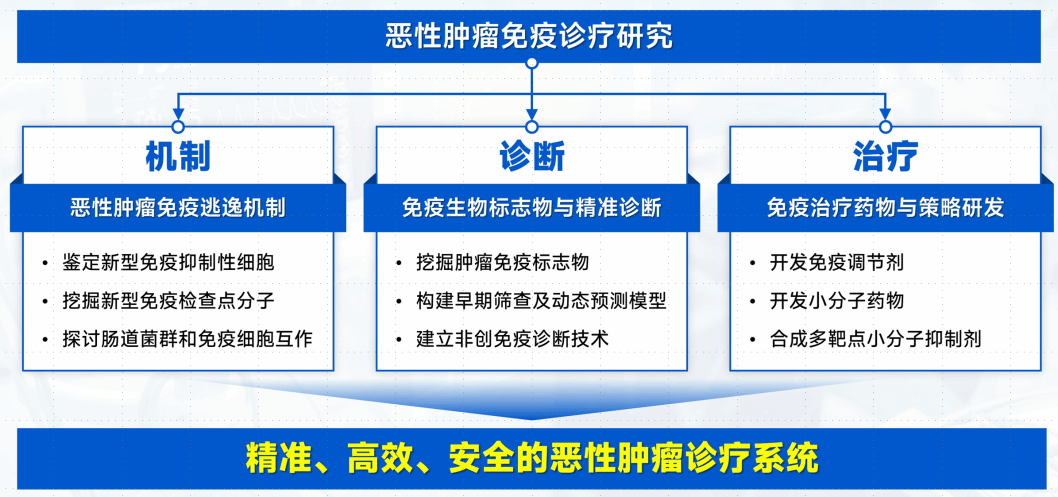

The laboratory has 38 full-time research staff, including 20 with senior professional titles and 36 holding PhDs. The total value of its equipment exceeds 40 million RMB. Over the past three years, its members have led 23 National Natural Science Foundation projects (including one key project), 53 provincial and municipal projects, and 16 industry-commissioned horizontal projects. They have published over 200 high-impact papers in leading international journals, been granted 12 invention patents, and achieved one technology transfer. Their research has earned one Second Prize of Anhui Provincial Science and Technology Award, one Second Prize and one Third Prize of Ningbo Science and Technology Progress Award. More than 100 graduate students have been trained.
Ningbo Key Laboratory of Maternal and Child Health Promotion and Intelligent Precision Intervention
The laboratory is directed by Dr. Xuan Rongrong, Chief Physician at the First Affiliated Hospital. Built upon the key discipline of perinatal medicine, the team brings together experts in obstetrics, gynecology, reproductive medicine, and traditional Chinese medicine. Located in the “Zhihe Innovation Center” at the Fangqiao campus of the hospital, the laboratory has a centralized research platform covering 2,008 square meters, with equipment valued at over 21 million RMB. Based on molecular immunology, birth cohort studies, multi-dimensional biobanks, and AI-powered big data analytics, the laboratory has established an open, comprehensive research platform for key areas including maternal-fetal precision medicine, gestational exposure omics, and AI-assisted diagnosis of perinatal diseases.

Main research directions: (1) Mechanisms of transgenerational effects of gestational exposure factors on offspring development and new strategies for precision prevention and control; (2) Development of risk early-warning and early diagnosis models for pregnancy complications using exposure omics biomarkers combined with AI; (3) Clinical translation research targeting key internal and external exposure factors for the prevention and treatment of maternal and neonatal diseases. Over the past three years, the team has undertaken 43 vertically funded projects, including 7 national-level and 7 provincial-level projects, published 85 SCI papers (31 with impact factor ≥10), received six science and technology awards at or above the municipal level, and been granted 4 invention patents.
Ningbo Key Laboratory of Innovative Diagnosis and Treatment of Macrovascular Surgery
The laboratory is directed by Dr. Sun Lebo, Chief Physician at the Affiliated Li Huili Hospital. The team comprises 43 research staff, including 12 with senior professional titles and 12 with associate senior titles, and 13 PhDs; 72.09% hold senior/associate senior titles or PhDs. The laboratory aims to systematically investigate the molecular mechanisms, risk prediction models, and translational research on novel diagnostics and therapies for aortic aneurysms, aortic dissections, and aortic valve diseases, thereby advancing regional clinical and research capabilities. Aortic dissection, a representative macrovascular disease, is life-threatening with high mortality and disability without timely treatment, posing a serious threat to public health. Given the unresolved mechanisms and limited therapeutic options, a municipal key laboratory is urgently needed to explore innovative strategies. Addressing challenges in early risk assessment, pathogenesis (thoracic aortic disease), intervention targets (aortic valve disease), and timing/prognosis (abdominal aortic disease), the laboratory will investigate biomarkers, novel material hemodynamics, and database prediction models for thoracic aortic disease; pathogenic targets and AI prediction models for aortic valve disease; and mechanisms, inflammatory molecules, and smooth muscle phenotypic switching for abdominal aortic disease, aiming to solve these clinical problems through integrated basic and clinical research.

Ningbo Key Laboratory of Precision Integrated Prevention, Treatment, and Translation for Multi-system Comorbidities of Fatty Liver Disease
The laboratory is directed by Dr. Xu Lanman, Professor and Chief Physician at the Affiliated People’s Hospital. Breaking away from isolated liver disease research, the laboratory focuses on three directions: mechanisms and target discovery of multi-system comorbidities in fatty liver disease, precision intervention and clinical translation, and early warning and intelligent co-management. Integrating multiple disciplines including “liver-metabolism,” “liver-kidney,” “liver-gut,” “liver-heart,” and “liver-brain,” the laboratory is building a multi-omics database, identifying cross-organ pathways, developing “one-target-multiple-effect” therapies, and promoting intelligent, full-process management. The goal is to establish a high-level platform for precision integrated management of fatty liver disease comorbidities, achieving mechanistic breakthroughs and key technological innovations to significantly reduce disease burden.
The laboratory has a total area of 2,612 square meters, housing platforms for cell biology, mass spectrometry, microscopy, protein analysis, PCR, liver pathology, and an anaerobic workstation for microbiome research. The 49-member team has, over the past three years, undertaken 14 national and provincial-level projects, published 101 papers (22 in top-tier journals), been granted 15 invention patents, and received three first-prize, three second-prize, and three third-prize provincial/ministerial awards, along with multiple municipal awards.

Ningbo Key Laboratory of Precision Critical Care and Translational Research
The laboratory is directed by Dr. Zhao Xiaojie, Chief Physician at the Affiliated Yangming Hospital. Operating in partnership with Ningbo University, the First Affiliated Hospital of Ningbo University, and industry leaders such as Shunyu Group and Jiangfeng Bio, the laboratory has established an innovative platform integrating “medicine-engineering-science-industry.” Targeting three major challenges prevalent in eastern Zhejiang—traumatic sepsis, post-cardiac arrest organ injury, and refractory tissue damage—the laboratory focuses on developing a full-chain research system from “mechanism elucidation to precision intervention to targeted repair,” filling a gap in high-caliber critical care research platforms in the coastal eastern Zhejiang region. The laboratory has 3,464 square meters of research space, equipment valued at 26.22 million RMB, 40 full-time research staff (70% with senior titles or PhDs), and over the past three years has undertaken more than 20 national and provincial projects, published over 30 papers in CAS Zone 1 journals, been granted over 20 invention patents, and facilitated multiple local technology transfers.

These research and innovation platforms serve as a solid foundation for breaking through key technological bottlenecks, strengthening independent innovation, fostering high-level talent, and translating research outcomes. They facilitate a closed loop from research to clinical application and translation, improving overall medical care in Ningbo, reinforcing the city’s “Medical Peak” initiative, and supporting the Healthy China initiative and municipal health modernization.


